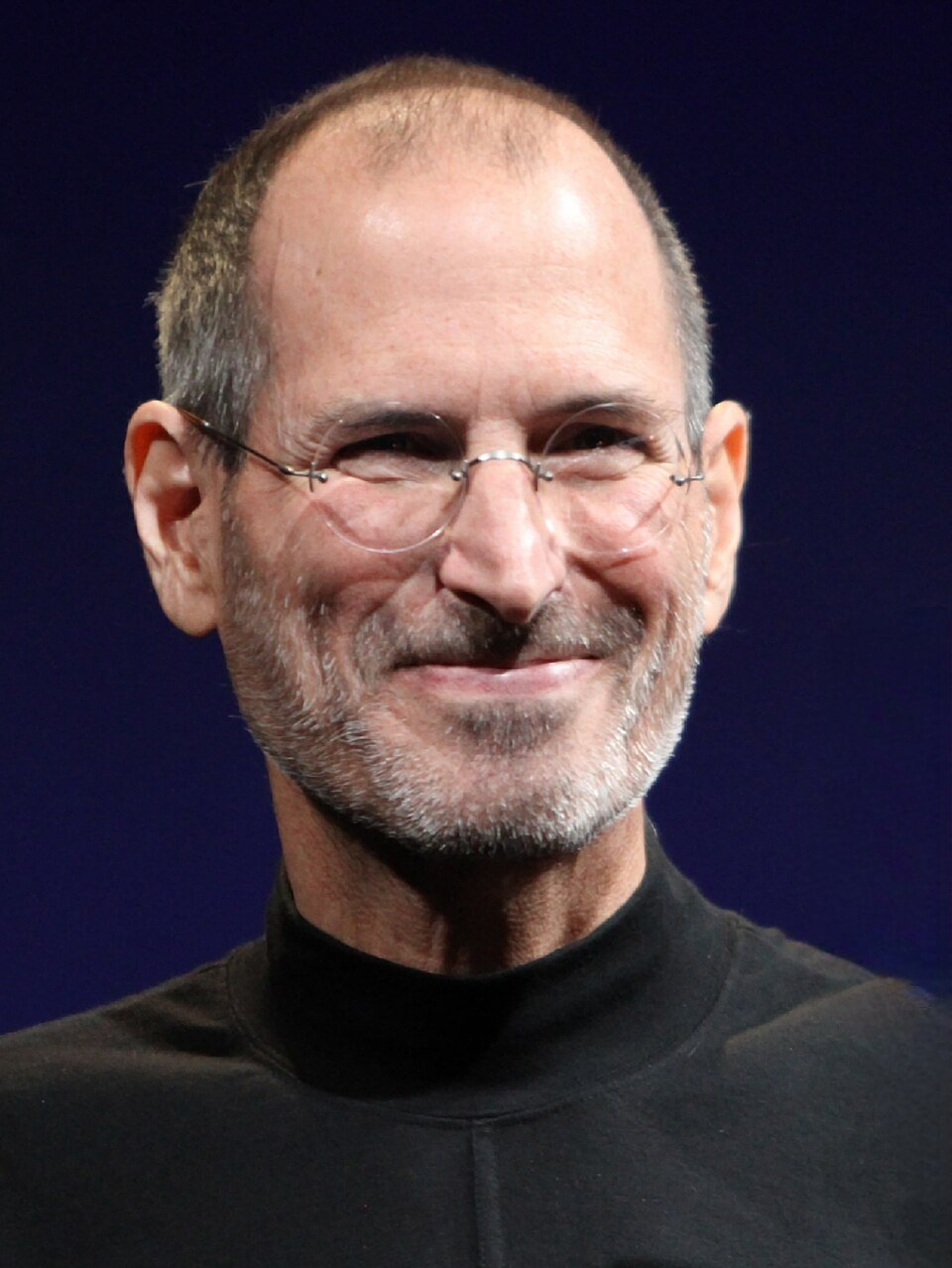
Who was Steve Jobs?
Steve Jobs was an American entrepreneur and inventor who co-founded Apple and became one of the most influential figures in modern technology. He worked across personal computers, consumer electronics, digital music and animated film, and is remembered for products that made powerful technology simple and beautiful to use.
Early life and education
Jobs was born in San Francisco in 1955 and adopted shortly after birth. He grew up in what later became Silicon Valley, surrounded by engineers and electronics. He enrolled at Reed College in 1972 but left after one semester, while continuing to sit in on classes that interested him, including calligraphy. That class later shaped the typography of the first Macintosh.
Career highlights
- Apple (1976): co-founded Apple with Steve Wozniak in a family garage. The Apple II became one of the first successful mass-market personal computers.
- Macintosh (1984): brought the mouse and graphical interface to everyday users.
- NeXT and Pixar: after leaving Apple in 1985, he founded NeXT and bought the company that became Pixar, which released Toy Story in 1995, the first fully computer-animated feature film.
- Return to Apple (1997): Apple acquired NeXT and Jobs came back to lead a company close to collapse.
Major achievements
Back at Apple, Jobs led a run of products that reshaped whole industries: the iMac (1998), iPod (2001), iTunes Store (2003), iPhone (2007), App Store (2008) and iPad (2010). In 2006, Disney bought Pixar in a deal worth about $7.4 billion, making Jobs Disney’s largest individual shareholder.
Expertise and leadership
Jobs was known for product vision, design taste and focus. He pushed teams to remove complexity, cared about details customers would never see and tied hardware, software and services into one experience. His leadership could be demanding, but it turned Apple into one of the world’s most valuable companies.
Impact
His work changed how people use computers, buy music, take photos and carry the internet in their pockets. The App Store also created a new economy for software developers and small businesses worldwide.
Recognition
Jobs received the National Medal of Technology in 1985 together with Steve Wozniak, and was posthumously awarded the Presidential Medal of Freedom in 2022. Many of his product launches are still studied in business and design schools.
Legacy and current influence
Jobs resigned as Apple’s CEO in August 2011 and died in October that year. Apple, NeXT technology (which became the base of macOS and iOS) and Pixar all continue his legacy today.
Vision and philosophy
He believed technology should sit at the intersection of the liberal arts and engineering. His 2005 Stanford commencement speech, which ended with the line “Stay hungry. Stay foolish,” remains one of the most watched graduation talks online.
Setbacks and comeback
In 1985, after a power struggle with Apple’s board and then-CEO John Sculley, Jobs was pushed out of the company he had started. Instead of giving up, he founded NeXT and invested in Pixar. NeXT’s software later became the foundation of macOS and iOS, and Pixar became the most successful animation studio of its time. Jobs later said that being forced out gave him the freedom to be a beginner again and enter one of the most creative periods of his life.
Timeline: key moments
- 1955Born in San Francisco and adopted
- 1976Co-founds Apple with Steve Wozniak
- 1977Apple II launches
- 1984Macintosh introduced
- 1985Leaves Apple and founds NeXT
- 1986Buys the company that becomes Pixar
- 1995Pixar releases Toy Story
- 1997Returns to Apple
- 2001iPod launches
- 2007iPhone launches
- 2010iPad launches
- 2011Steps down as CEO in August; dies in October
Lessons for your career
Focus on a few things and do them well, care about the user’s experience and keep learning from fields outside your own. Explore our skill roadmaps to start building your own path.
Steve Jobs turned complex technology into simple, personal tools, and showed how design, focus and persistence can change entire industries.